
Twenty-five years in. Still building.
Nine transatlantic systems, the landing stations they come ashore in, and the backbone and metro fibre either side of them. Built and run by people who have been doing this since 2001.
Excellence is never calling it finished.
When I Squared acquired the network in September 2021, it acquired twenty years of decisions with it: 103,000 route km, three transatlantic systems, and the engineers who'd built them and knew what to build next. Seventy-seven thousand kilometres later, that turned out to be only the baseline.
The first programme
€190 million in the first six months, and over 7,000 kilometres of new route. London to Amsterdam with a new North Sea cable. A third way into Marseille from Paris. The Iberian build begun at Barcelona, and Portugal brought in at Lisbon and Sines.
Twenty projects in a year
€210 million committed and 10,940 kilometres approved. The Trans-Adriatic Express went live from Bari to Istanbul with GÉANT already on it. Salzburg to Belgrade opened the North Balkans. And Havfrue and Dunant joined the three inherited cables, making five ways across the Atlantic.
Diversity, by design
Amitié made six transatlantic routes. Palermo to Genoa gave Sicily four independent paths to the mainland. An 1,850-kilometre corridor across Turkey with SOCAR Fiber opened a land route past the Red Sea. Bulgaria's GCN network joined. And Project Visegrád began across Poland, laid beside the Druzhba pipeline.
The year it connected
London to Frankfurt, Amsterdam and Brussels went live: 1,200 kilometres including the new Margate to Ostend crossing. Stockholm reached Helsinki, following the power. Ashburn to Atlanta lit at 400G, the first terrestrial build on the far side of the ocean. And Serbia's Conexio ducts joined: 860 kilometres and fifteen PoPs.
Aqua Comms joins the network
Two teams that spent a decade as peers on the same ocean now run it as one. Around 13,000 kilometres of transatlantic systems, two Irish Sea cables, and the people who landed them, keep them lit, and know every anchor risk on the route. Nine transatlantic cables, four wholly owned and operated, live from the day the deal closed.
Across Spain, into the Baltics
Barcelona to Bilbao opened, cutting cross-Spain latency by half. The Baltics came onto the backbone, Norway joined Sweden, and Turkey extended inland to Ankara. Visegrád's first routes came on, with more through 2027.
What comes next
The next transatlantic system, EXA Meridian, is in planning. The build programme runs on into markets that don't yet have the demand to justify it, because by the time they do it'll be too late to start. Excellence is what we keep doing.
Demand is outrunning the ocean
Every new AI cluster, every migration, every model trained across two continents adds load to the same finite set of transatlantic systems. Demand keeps climbing. Capacity can't, because a new cable takes years to plan, permit, manufacture and lay.
The gap between those two lines is why we started building before anyone asked.
The long-haul and subsea layer is the scarcest and hardest-to-build layer of the stack that the cloud and AI build-out depend on.
It's the layer we own.
The long-haul and subsea layer is the scarcest and hardest-to-build layer of the stack that the cloud and AI build-out depend on.
It's the layer we own.
Excellence is the part that doesn't show on the map.
Excellence is the part that doesn't show on the map.
Subsea engineering is a small world. The people who can land a cable, keep it lit for twenty-five years and find a fault at depth are counted in dozens. In January 2026, two of those teams became one. That's what the acquisition actually bought.



An acquisition that deepened the owned Atlantic estate, bringing the two fastest New York to London routes under single ownership, joined two teams that spent a decade as peers on the same ocean, and completed the mesh: subsea and terrestrial engineered as one system.
9
transatlantic cables
4
wholly owned and operated
180k+
route km of fibre and duct, owned and operated, in the mesh
Multiple
alternative routes between any two points
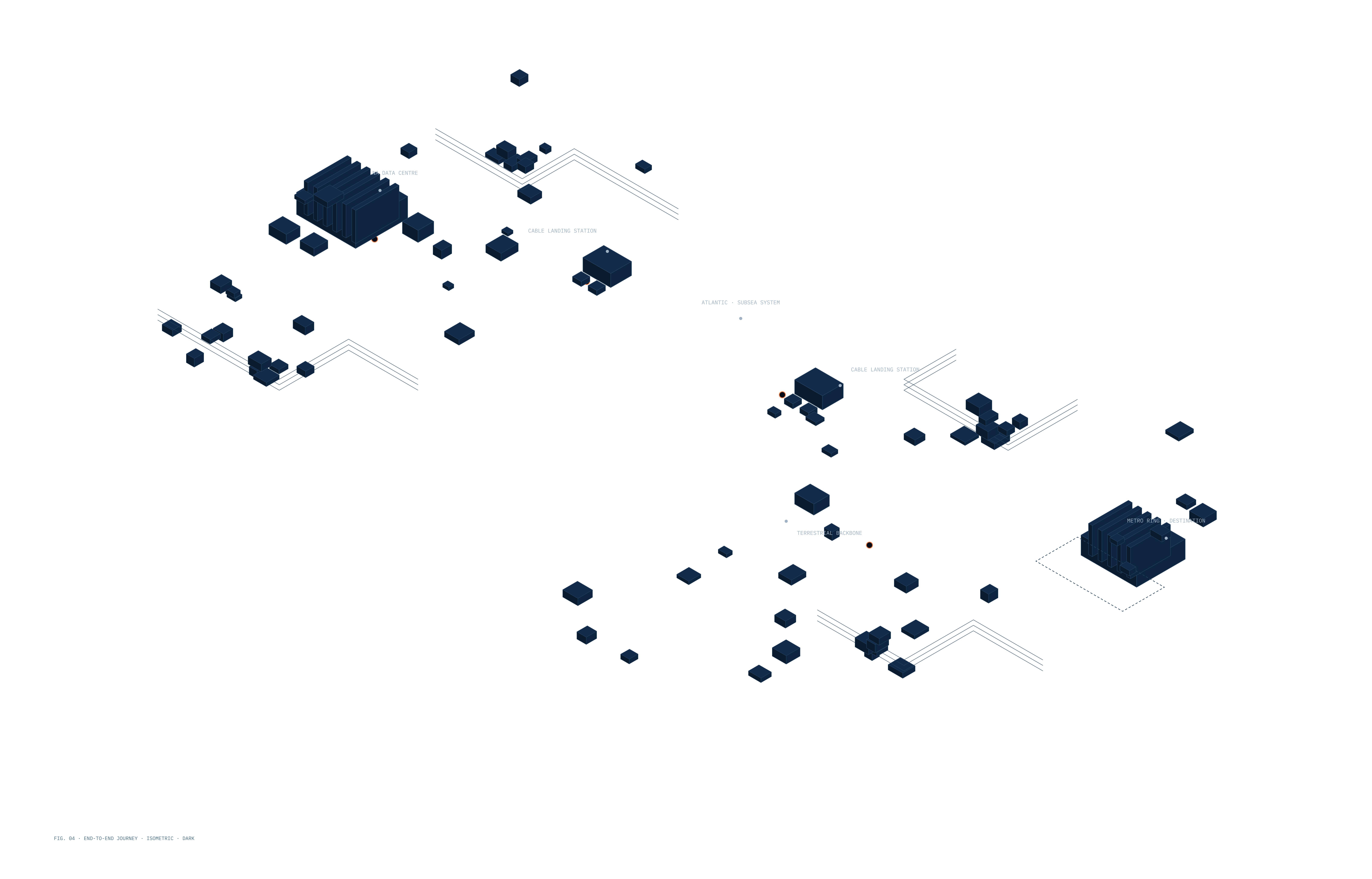
Excellence is what happens at three in the morning.
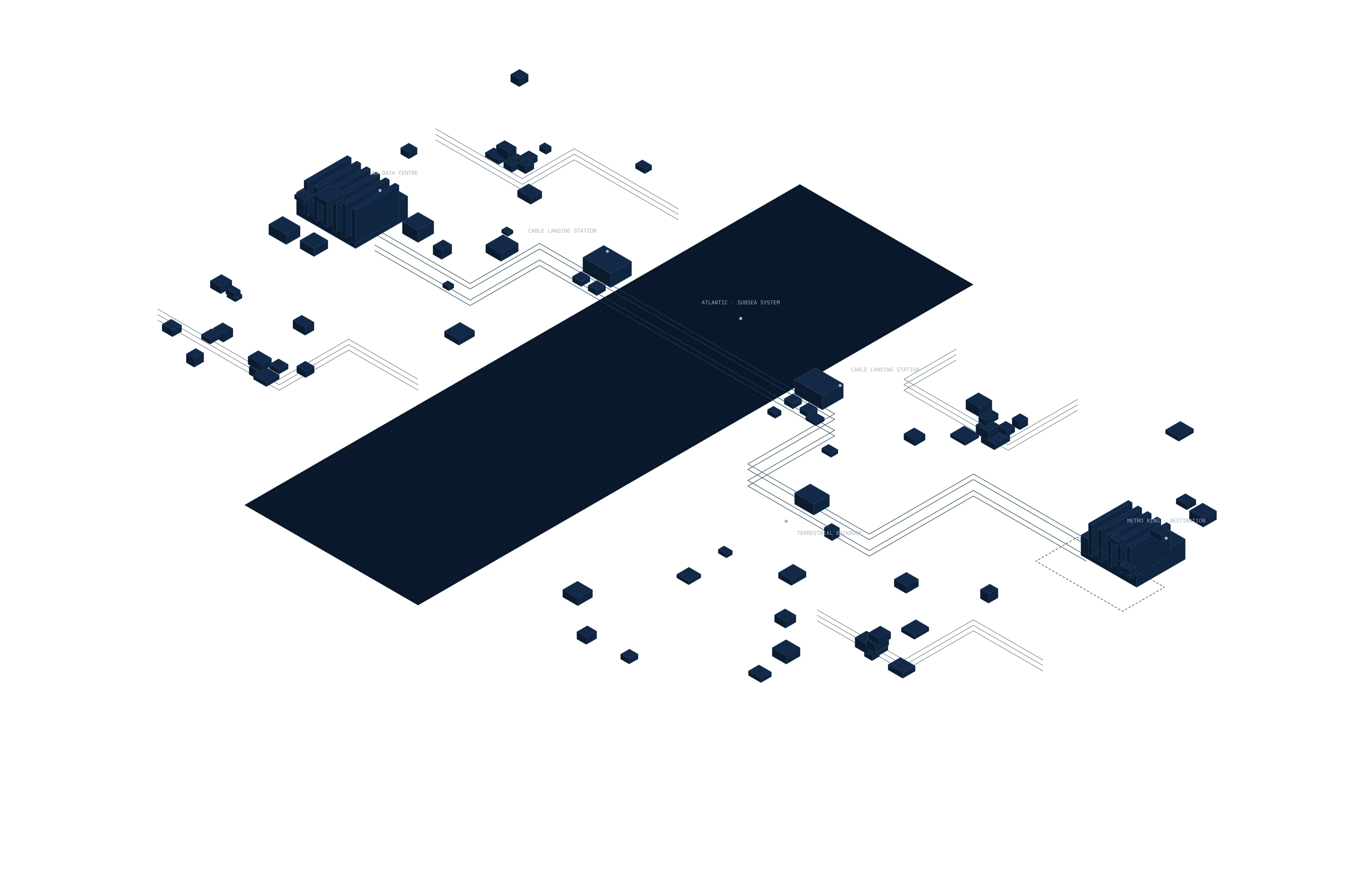
Data centre interconnects
Your workload leaves a North American data centre and enters the network EXA Infrastructure owns from this point onward, no handoff to a third party before it reaches the ocean.
Atlantic subsea systems
Nine transatlantic cables, four wholly owned and operated, meshed so a fault on one is a reroute rather than an outage. The leg where the mesh earns its keep.
Cable landing stations
One NOC, operating from a landing station since 2005, with teams in Dublin and Pune. You reach the engineers who run the network, on the first call.
Terrestrial backbone
180,000+ route km of fibre, owned and operated, carries the signal onward. Same operator, same accountability, no second contract to chase.
Metro ring · destination
The signal reaches its destination through a metro ring built for resilience as well as proximity. One team, start to finish.


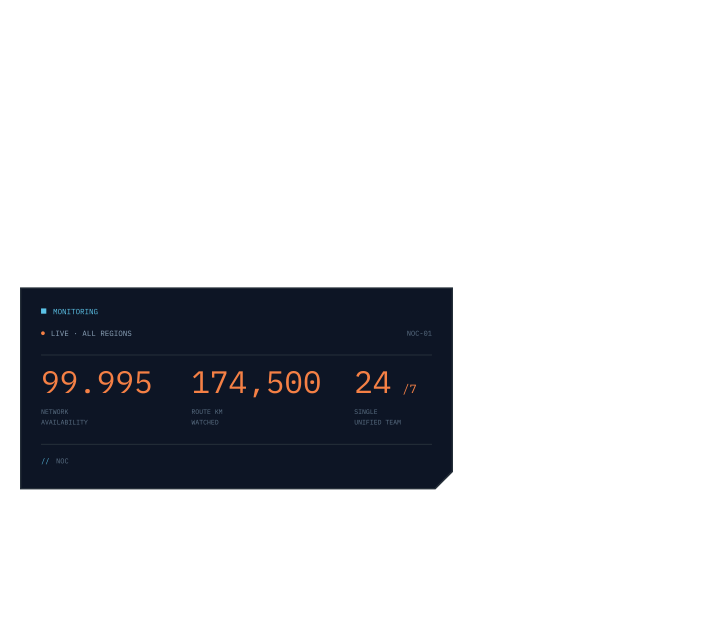
Every route, every hour.
Our operations centre sees the whole network, end to end. The engineers monitoring your circuit are the ones accountable for it, so a fault is found, owned and fixed by the same team, with no handover in between.
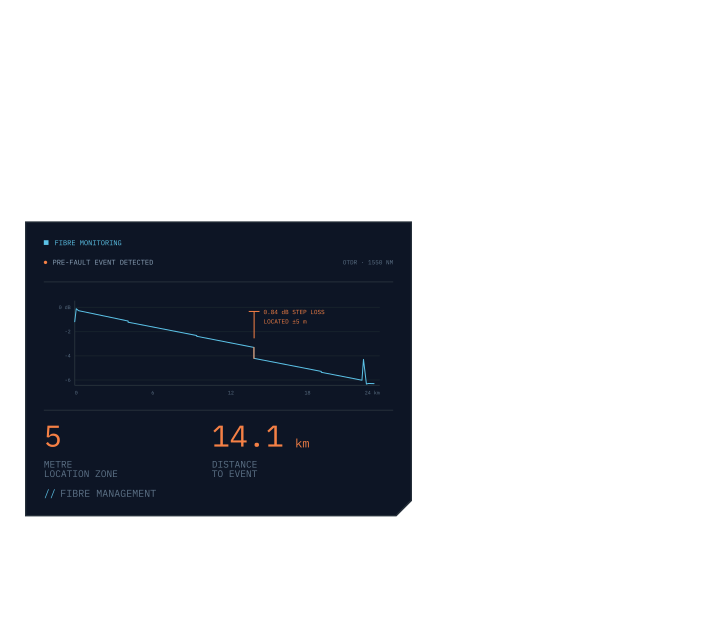
We find faults before they become outages.
Continuous fibre monitoring reads the health of every span and flags degradation while traffic is still flowing. When something shifts, we locate it to within a five-metre zone. The repair starts with an address, not a search.
The safest cable is the one everybody knows about.
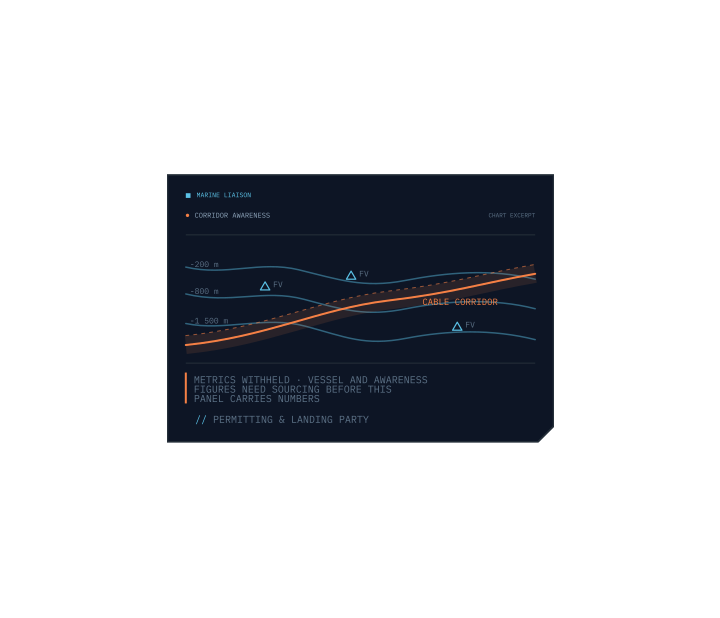
Most subsea damage comes from anchors and trawl gear, not from the sea. So protection begins on land, with charts, permits, and conversations with the harbourmasters and fishing fleets working the water above our cables.
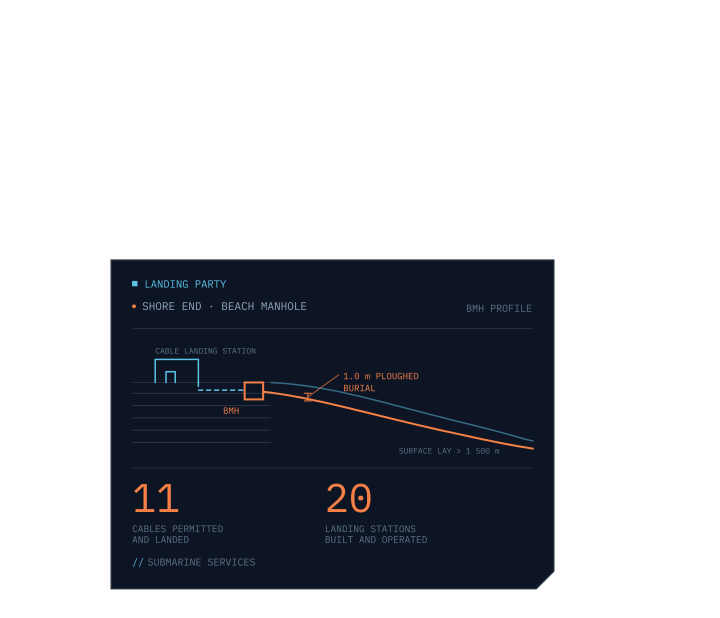
Every cable comes ashore somewhere.
The shore end is the hardest kilometre. Shallow water, crowded seabed, and a manhole buried in a beach. We've permitted and landed eleven cable systems, and we operate the stations they land into.
Repair starts with a ship, not a ticket.
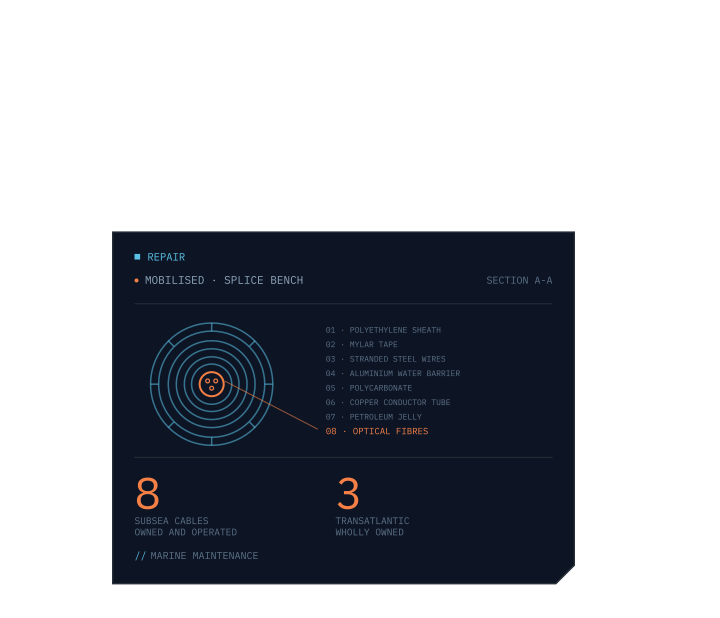
Eight layers of steel, copper and polymer wrapped around fibres the width of a hair. Seven of them exist so the eighth never has to be touched. When it does, we go to a plan, not the market: the cover, the vessel and the jointer are all in place and ready to go before a fault happens.
Our hands, your equipment.
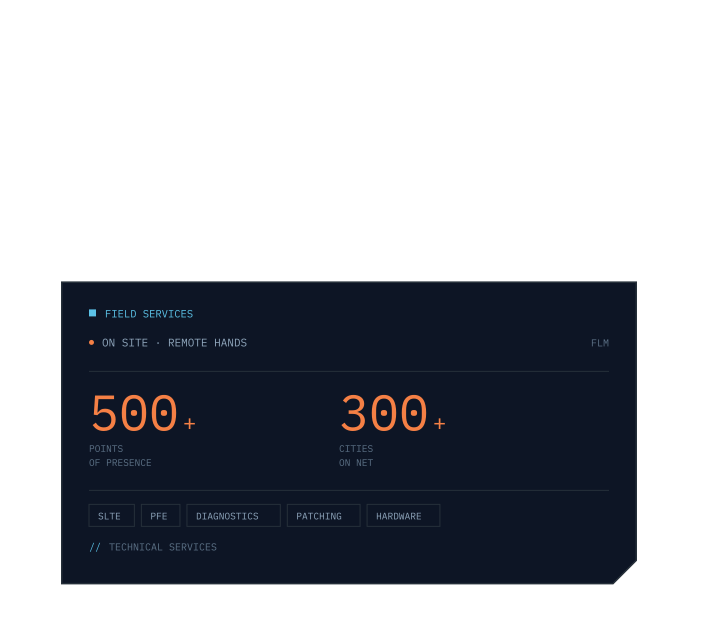
Across 500+ points of presence our field engineers work as an extension of your team: patching, diagnostics, hardware replacement, SLTE and PFE support. You don't need to be in the building. Somebody is.


Roughly 150 to 200 cable faults happen globally each year, mostly accidental, and repair capacity is finite. AI workloads don't pause for a fault at sea.
Roughly 150 to 200 cable faults happen globally each year, mostly accidental, and repair capacity is finite. AI workloads don't pause for a fault at sea.
We deliberately design diversity at a corridor level, so that no single chokepoint, landing cluster or repair queue can take a route down without an alternative.
We deliberately design diversity at a corridor level, so that no single chokepoint, landing cluster or repair queue can take a route down without an alternative.
We're building the Atlantic's next chapter now. While others retire systems, this team is still adding capacity.
We run it, you rely on it.
We're building the Atlantic's next chapter now. While others retire systems, this team is still adding capacity.
We run it, you rely on it.